- Description
- Curriculum
- Reviews
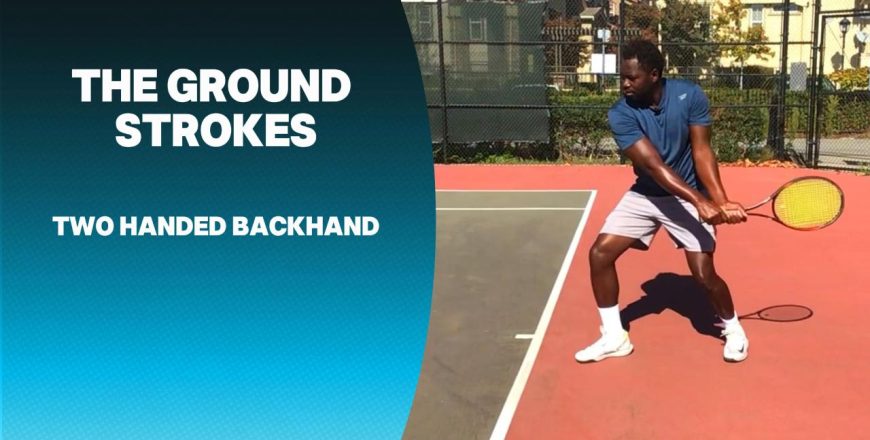
The backhand groundstroke is a shot hit after the ball bounces once on the court, using the backhand side of the body. It is one of the most important strokes in tennis because it is used frequently during baseline rallies.
A backhand groundstroke is a fundamental tennis shot executed after the ball bounces once on the court, where a player swings the racket across their body with the back of the dominant hand facing the direction of the stroke. It is typically hit from the baseline or used as an approach shot to transition toward the net. Because the dominant hand pulls into the shot rather than pushing through it, many players find the backhand more technically challenging to master than the forehand
The Three Main Variations
Players generally adopt one of three primary styles to hit a backhand groundstroke:
Two-Handed Backhand: The most popular variation in modern tennis. The dominant hand sits at the bottom of the handle (often in a Continental grip) while the non-dominant hand rests above it (in an Eastern forehand grip). This style offers excellent stability, extra power from the non-dominant arm, and is much easier for beginners to learn
One-Handed Backhand: A classic variation typically hit using an Eastern backhand grip. It offers a significantly longer reach and allows for a larger, more fluid swing radius to generate heavy topspin. However, it requires excellent timing and greater upper-body strength.
The Three Phases of the Stroke
Regardless of the variation, a clean backhand groundstroke relies on a highly synchronized three-phase movement
[ Preparation ] ➔ [ Acceleration ] ➔ [ Follow-Through ]
Preparation: As the opponent hits the ball, the player executes a well-timed split-step and coils their upper body into a “unit turn” to take the racket back. The back foot loads the body’s weight.
Acceleration: The player drops the racket head below the height of the ball to establish a low-to-high swing path. Weight transfers forward as the shoulders and hips rotate. Contact with the ball should ideally be made at waist-to-hip height, slightly in front of the body.
Follow-Through: The racket continues its forward and upward trajectory. For a two-handed shot, the swing finishes high over the dominant shoulder. For a one-handed topspin shot, the non-dominant arm extends backward to prevent the torso from over-rotating
What Is a Backhand Groundstroke ?
A backhand groundstroke is played from the baseline or mid-court after the ball bounces. The player swings the racket across the body on the non-dominant side.
For a right-handed player:
-
Forehand groundstroke: hit on the right side.
-
Backhand groundstroke: hit on the left side.
Phases of the Backhand Groundstroke
1. Ready Position
-
Stand with knees slightly bent.
-
Hold the racket in front of the body.
-
Stay balanced on the balls of the feet.
2. Unit Turn
As soon as you recognize the ball is coming to your backhand:
-
Turn your shoulders and hips.
-
Take the racket back with your body rotation rather than just your arms.
-
Keep your eyes on the ball.
3. Forward Swing
-
Transfer weight from the back foot to the front foot.
-
Swing from low to high to create topspin.
-
Rotate the hips and shoulders through the shot.
4. Contact Point
-
Strike the ball slightly in front of the body.
-
Keep the racket face stable.
-
Maintain balance throughout contact.
5. Follow-Through
-
Continue the swing after impact.
-
Finish high with the chest facing toward the target.
-
Allow the body to rotate naturally.
Types of Backhand Groundstrokes
Two-Handed Backhand Groundstroke
The most common backhand in modern tennis.
Benefits
-
Excellent control and consistency.
-
Easier to generate power.
-
Handles high-bouncing balls well.
One-Handed Backhand Groundstroke
Uses only the dominant hand during the forward swing.
Benefits
-
Greater reach.
-
More variety and spin options.
-
Effective for attacking shots.
Topspin Backhand Groundstroke
The topspin backhand is the most common form of backhand groundstroke.
Characteristics
-
Racket travels upward through the ball.
-
Produces forward rotation (topspin).
-
Creates a higher margin over the net.
-
Improves consistency during long rallies.
Tactical Uses
A strong backhand groundstroke can be used to:
-
Rally cross-court with consistency.
-
Change direction down the line.
-
Open angles to move an opponent off the court.
-
Defend against aggressive shots.
-
Create opportunities to approach the net.
Cross-court backhands are generally safer because the net is lower in the center and the court is longer diagonally.
Common Technical Errors
-
Preparing the racket too late.
-
Making contact beside or behind the body.
-
Swinging mainly with the arms instead of using body rotation.
-
Standing too upright.
-
Stopping the swing at contact instead of following through.
Key Coaching Points
Many coaches summarize an effective backhand groundstroke with three fundamentals:
-
Early preparation – turn the shoulders immediately.
-
Contact in front – don’t let the ball get too close.
-
Low-to-high swing path – generate topspin and control.
When these fundamentals are combined with good footwork, the backhand groundstroke becomes a reliable weapon for both defense and attack.
Two-Handed Backhand in Tennis
The two-handed backhand is a backhand stroke in which both hands remain on the racket during the swing. It is the most commonly used backhand in modern tennis because it provides excellent control, stability, and power.
Why Players Use a Two-Handed Backhand
The two-handed backhand offers several advantages:
-
Greater stability: Both hands help control the racket face at contact.
-
More power: The non-dominant hand contributes significantly to racket speed.
-
Better return of serve: The compact swing handles fast serves effectively.
-
Easier on high balls: Modern tennis often produces high-bouncing shots that are easier to manage with two hands.
Technique Breakdown
1. Grip
For a right-handed player:
-
Dominant (right) hand: usually a Continental or Eastern backhand grip.
-
Non-dominant (left) hand: often an Eastern forehand grip.
The non-dominant hand is responsible for much of the acceleration and topspin production.
2. Unit Turn
As soon as you recognize the ball is coming to your backhand:
-
Turn the shoulders and hips together.
-
Take the racket back with the body rotation.
-
Keep both hands on the racket.
This early preparation is critical for timing.
3. Forward Swing
-
Push off the outside leg.
-
Rotate the hips and shoulders toward the ball.
-
Drive the racket from low to high.
The low-to-high motion creates topspin, helping the ball clear the net and dip back into the court.
4. Contact Point
-
Strike the ball slightly in front of the body.
-
Keep the head steady.
-
Maintain balance through contact.
A common mistake is allowing the ball to get too close before swinging.
5. Follow-Through
-
Continue the swing smoothly after contact.
-
Finish high across the body.
-
Allow the shoulders to rotate fully.
Topspin Two-Handed Backhand
The topspin backhand is the standard version used in rallies.
Benefits:
-
Consistency
-
Margin over the net
-
Ability to hit with pace while maintaining control
This stroke forms the foundation of modern baseline tennis.
Common Tactical Uses
Cross-Court Backhand
The safest and most common pattern.
-
Longer court distance.
-
Lower net height in the middle.
-
Allows players to rally consistently.
Down-the-Line Backhand
More aggressive.
-
Changes direction.
-
Forces opponents to cover more court.
-
Often used as an attacking shot.
Backhand Return of Serve
The compact nature of the two-handed backhand makes it especially effective against powerful serves.
Common Mistakes
Squeezing Too Tight: Gripping the handle too hard restricts wrist snap, leading to weak, muscled arm shots rather than effortless body rotation
Stepping Across the Body: Stepping too far across locks your hips, which completely blocks your body weight from transferring into the bal
Dominant Hand Domination: Allowing the bottom hand to pull the racket usually results in an accidental slice or a lack of topspin. Focus on pushing through the ball with your top hand.
❌ Late preparation
❌ Swinging only with the arms
❌ Contacting the ball too close to the body
❌ Standing upright instead of bending the knees
❌ Stopping the swing at impact
3. Advantages
|
Feature |
Two-Handed Backhand |
|
|
Stability |
High (Two hands easily brace against heavy incoming pace) |
|
|
High Balls |
Easy (Top hand can drive down through high bouncing balls) |
|
|
Learning Curve |
Fast (Highly recommended for beginners and children) |
|
|
Court Reach |
Limited (Two hands on the racket restrict ultimate physical reach) |
|
|
Defensive Variety |
Harder to disguise slices and drop shots fluidly |
Key Coaching Tip
Many coaches describe the two-handed backhand as being powered largely by the non-dominant hand. For a right-handed player, the left arm should feel as though it is driving the shot through the ball. When combined with early shoulder rotation and good footwork, this creates a backhand that is both powerful and reliable.
A useful practice drill is to rally cross-court using only backhands, focusing on:
-
Early shoulder turn.
-
Contact in front.
-
Smooth low-to-high swing.
-
Balanced follow-through.
These fundamentals are the foundation of the two-handed backhand used by today’s top professionals.

-
15
 Introduction To The Two Handed Backhand Preparation
 -
16
How To Take The Racquet Back In The Two Handed Backhand Preparation
-
17
The Racquet's Angle In The Two Handed Backhand Preparation
-
18
The Body Turn In The Two Handed Backhand Preparation
-
19
The Wrists Positions In The Two Handed Backhand Preparation
-
20
The Elbows Positions In The Two Handed Backhand Preparation
-
29
Introduction To The Two Handed Backhand Contact
-
30
Where To Make Contact In The Two Handed Backhand
-
31
The Body Rotation In The Two Handed Backhand Contact
-
32
Keeping The Eyes On The Ball In The Two Handed Backhand Contact
-
33
The Contact Point On The Ball In The Two Handed Backhand Contact
-
34
The Wrists Positions In The Two Handed Backhand Contact
-
35
The Elbows Positions In The Two Handed Backhand Contact
-
36
The Racquet Angle In The Two Handed Backhand Contact
-
37
The Racquet Acceleration In The Two Handed Backhand Contact
-
38
The Early Contact In The Two Handed Backhand